A Room-by-Room Declutter Checklist You Can Actually Finish in a Weekend


This is a room-by-room checklist for decluttering your entire home over one weekend, covering every major space from the kitchen to the closet. You start with the rooms that carry the most daily friction, work through a simple keep-toss-donate framework, and end Sunday with a genuinely lighter house. No motivational pep talk required.
The approach here skips the all-or-nothing mentality. You do not need to empty every drawer before you can call it progress. You just need a list, a couple of boxes, and about six hours spread across two days. Once the house is cleared out, many people find it is also the right moment to rethink how the space looks and feels. The budget cozy home decor guide covers how to make rooms feel warmer after you have cleared the clutter.
TL;DR
- Yes, one weekend is enough: a typical 3-bedroom home takes about 6-8 hours of sorting split across two days.
- Move room by room and give each space a hard 45-minute limit, sorting every item into keep, donate, or trash on the spot.
- Living around unused stuff carries a real cost: a 2010 UCLA study tied it to disrupted stress-hormone patterns.
Why Clutter Is Worth Taking Seriously
Clutter is not just an aesthetic problem. A 2010 study by researchers Darby Saxbe and Rena Repetti at UCLA, published in Personality and Social Psychology Bulletin, tracked cortisol levels in 60 dual-income couples over three weekdays. Women who described their homes with stressful, clutter-heavy language had flatter diurnal cortisol slopes, a hormonal pattern associated with worse long-term health outcomes. The men in the study were largely unaffected, which says something about how household mental load distributes unevenly, but the physiological finding holds regardless.
A more recent experimental study published in Frontiers in Psychology (PMC9216699) had participants care for an infant simulator in both a neutral room and a deliberately chaotic one. Salivary alpha-amylase, a reliable stress biomarker, was measurably higher in the chaotic condition. One messy room, one afternoon, enough to move a physiological needle.
The U.S. Environmental Protection Agency also notes that clutter accumulates dust, which worsens indoor air quality and aggravates asthma and allergy symptoms. Reducing surfaces that collect dust is one of their recommended strategies for improving indoor environments.
None of this means you need a minimalist showroom. It means there is a real, measurable cost to living around a lot of stuff you do not use.
Before You Start: The Three-Box System
Get three boxes or bags before you touch a single room. Label them:
- Keep: goes back into the room, properly placed
- Donate / Sell: leave immediately after the weekend (this is the step most people skip)
- Trash: broken, expired, or truly beyond use
A fourth category, Relocate, is useful if you find items that belong in a different room. Drop them at the door of that room as you go rather than walking them over mid-session. Every interruption breaks momentum.
One practical note: set a timer for each room. Forty-five minutes maximum per room on day one. If you are not done, close the box and move on. Perfectionism is the main reason a Saturday declutter becomes a three-week stall.
Room-by-Room Declutter Checklist
Kitchen (estimated time: 45 minutes)
The kitchen has the highest density of forgotten purchases. Start here because a visible win early in the day builds motivation for the rest.
- Expired pantry food (check dates on canned goods, spices, dry pasta)
- Duplicate utensils (do you really use four wooden spoons?)
- Appliances you have not touched in 12 months (the juicer, the panini press)
- Plastic containers without matching lids
- Coffee mugs beyond what your household actually uses in a week
- Junk drawer: pens that do not work, dead batteries, mystery keys
- Under-sink cleaning products: consolidate or toss what is empty or unused
Living Room (30 minutes)
- Magazines and catalogs older than 3 months
- Remote controls for devices you no longer own
- Decor items you keep out of obligation, not because you like them
- Cables and chargers with no identifiable device
- Books you will not re-read (be honest)
- Throw blankets and pillows beyond what actually gets used
Bedroom (45 minutes)
Clothing takes the most time, so it gets its own breakdown.
- Clothing on the "maybe" pile: if it has been in the maybe pile for more than 6 months, it goes to donate
- Shoes: pull everything out, keep only what you wore in the last year
- Bedside table: receipts, old medications (check expiry), books you started but will not finish
- Under-bed storage: this is often where things go to be forgotten; treat it like a box that needs justification
- Linens: two sets per bed is enough for most households
Bathroom (20 minutes)
- Expired medications (dispose of these properly, not down the drain; many pharmacies accept them)
- Products you bought, tried once, and hated
- Travel-size items accumulated from hotels
- Old makeup (mascara has a 3-month shelf life; most foundations last a year)
- Duplicate products where you opened a new one before finishing the old
Home Office or Desk Area (30 minutes)
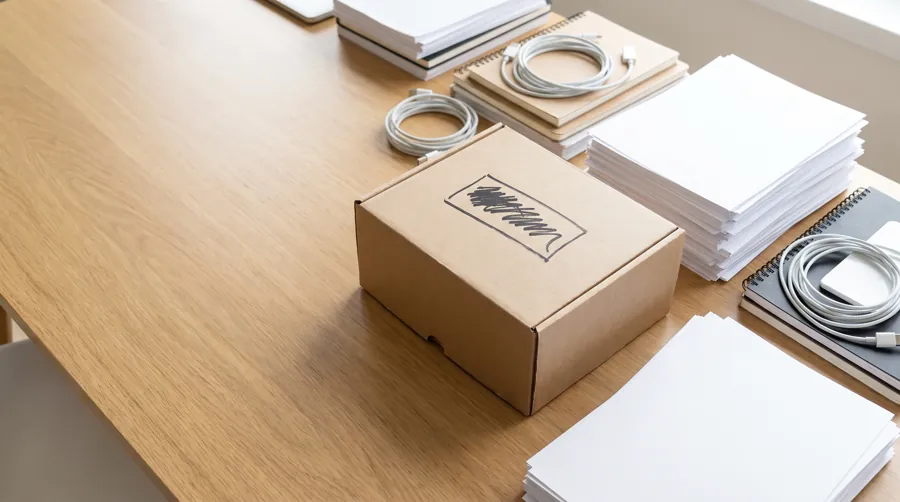
- Papers: shred or recycle anything you would not specifically look for in 12 months
- Old cables, adapters, and peripherals for retired devices
- Pens and markers: test every single one, toss what is dry
- Books and manuals for appliances you no longer own
- Desk surface: if you cannot clear it in 10 minutes, it has too much on it
Once the desk is cleared, it is worth thinking about what you actually want on it. The home office guide covers how to make that space feel good to sit down at, not just functional.
Garage or Storage Area (60 minutes)
Give this one full hour on day two. Garages are where declutter plans go to die because the volume is high and decisions are harder. Work by category: tools, sporting equipment, holiday decor, car supplies. One category at a time, same three-box system.
- Broken tools with no plan to fix them
- Sporting gear for activities you stopped doing more than 2 years ago
- Duplicate holiday decor (you do not need 6 boxes of tinsel)
- Paint cans that are dried out or so old you do not know which room they match
- Kids' items they have aged out of (donate promptly, they have a second life)
7 Unusual Ways to Declutter Your Home That Actually Work
Standard advice says to declutter by category or by room. Here are some approaches that work when standard advice stalls:
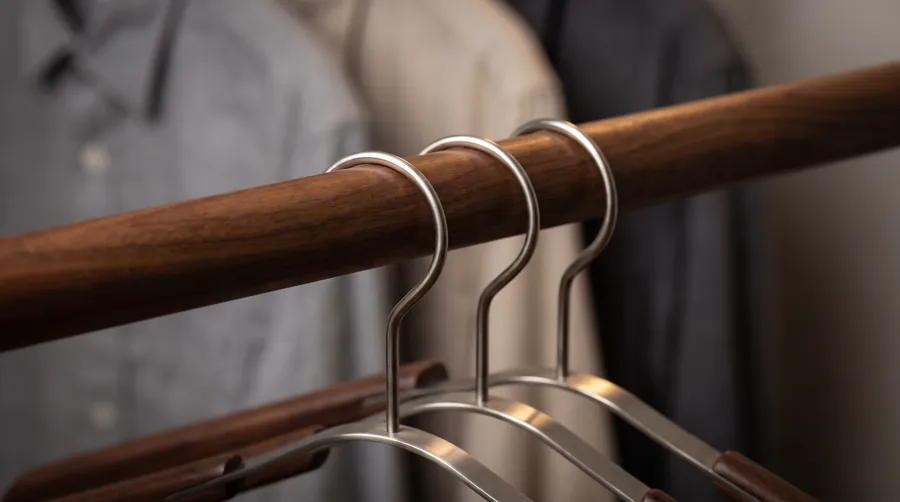
- The reverse hanger trick for clothes: Hang all clothes with the hanger facing the wrong way. After 6 months, anything still facing backward gets donated. No decision-making required in the moment.
- The one-in-one-out rule, applied strictly: Every time something new enters the house, something else leaves. Works especially well for kitchen gadgets and books.
- The box-in-the-basement test: For sentimental items you feel guilty donating, put them in a box in storage with a date 6 months out. If you have not opened the box by that date, donate it without reopening it.
- Photo everything you release: Take a photo of items before donating them. Knowing you have the image makes it easier to let go of the physical object.
- Declutter at the source: Stop bringing in as much. Unsubscribe from physical catalogs at catalogchoice.org. Decline freebies at events. The best decluttering is stuff that never enters the house.
- Sell with a deadline: Post items on Facebook Marketplace or eBay with a 2-week window. If unsold by the deadline, donate immediately. No re-listing.
- Clean off surfaces first, not drawers: Visible surfaces create the immediate impression of order. Starting with drawers produces invisible progress that does not sustain motivation. Clear surfaces first, hidden storage second.
How to Declutter Before Moving
Moving is the most practical forcing function for decluttering because carrying unnecessary things costs real money. Professional movers often charge by weight or truck space. If you are moving, run through the full checklist above before you pack a single box.
The key additional step before a move: measure your new space before packing bulky furniture. A sofa that works in a 600-square-foot apartment may not work in the new one. Sell or donate large items before moving day rather than paying to move them and realizing the problem on the other side.
What to Do With the Donation Box Before It Gets Absorbed Back Into the House
The donate box sitting in your hallway for three months is not a completed task. It is clutter with extra steps.
Load it into your car immediately after you close the box. Schedule the drop-off before you go to bed on Sunday. Goodwill, The Salvation Army, and most local thrift stores accept drop-offs seven days a week. If you have larger furniture, organizations like Habitat for Humanity ReStores often schedule pickup. Book the pickup before the weekend is over.
Key Takeaways
- Clutter has a measurable physiological cost: higher stress hormones, disrupted sleep, and poorer indoor air quality.
- Use three boxes (Keep, Donate, Trash) and a 45-minute timer per room to maintain momentum.
- Start with the kitchen: it gives the fastest visible win.
- Unusual approaches like the reverse hanger trick or the box-in-storage test work when standard advice stalls.
- Decluttering before a move saves real money in moving costs.
- The donate box only counts when it leaves the house. Put it in your car the same day.
- A clearer home also supports a slower, calmer pace of life. If that idea interests you, the slow living guide covers practical ways to bring more intention into your daily routine.
- Browse more home-related guides in the home and living category.
Watch: How to Declutter Your Whole House in a Weekend
This video walks through a practical whole-house declutter with a similar room-by-room structure. Worth watching for the visual examples of before-and-after sorting, particularly the kitchen and closet segments:
One thing the video does well: it shows how quickly decisions become automatic once you get into a rhythm. The first room takes the longest. By room three or four, you are moving fast.
Frequently Asked Questions
How long does it actually take to declutter a whole house?
For a typical 3-bedroom home, a realistic weekend declutter runs 6 to 8 hours of active work, spread across two days. The kitchen takes around 45 minutes, bedrooms around 45 minutes each, the bathroom 20 minutes, and the garage or storage area up to an hour. The actual sorting is faster than people expect; the drag comes from indecision. Setting a 45-minute timer per room removes most of the stalling.
What is the best order to declutter rooms?
Start with the kitchen, then the living room, then bathrooms, then bedrooms, then any storage or garage space. The logic is simple: high-use rooms first, where you will immediately feel the impact of the change. Storage areas last, because they are lower daily friction and take longer to sort through.
How do I declutter when I feel overwhelmed by the amount of stuff?
Shrink the scope. Instead of "declutter the bedroom," the task becomes "clear one surface." Instead of "deal with the closet," it becomes "fill one donate bag from the closet." One box, one bag, one surface. That is a complete task. The momentum from finishing a small task makes the next one easier to start.
What should I do with items I cannot decide on?
Use the box-in-storage test: pack the undecided items in a box, seal it, write today's date on it, and put it somewhere out of sight for 6 months. If you have not opened it or missed anything in that time, donate the box without reopening it. Most people find they open it for one or two items and donate the rest.
Sources
- Saxbe, D. E., & Repetti, R. (2010). No Place Like Home: Home Tours Correlate With Daily Patterns of Mood and Cortisol. Personality and Social Psychology Bulletin, 36(1), 71-81. https://journals.sagepub.com/doi/10.1177/0146167209352864
- Zhao, M., et al. (2021). The causal effect of household chaos on stress and caregiving: An experimental study. Frontiers in Psychology. https://pmc.ncbi.nlm.nih.gov/articles/PMC9216699/
- U.S. Environmental Protection Agency. Improving Your Indoor Environment. https://www.epa.gov/indoor-air-quality-iaq/improving-your-indoor-environment
- U.S. Environmental Protection Agency. One Room at a Time: Pesticide Poison Prevention Checklist. https://www.epa.gov/sites/default/files/2015-10/documents/roombyroom-checklist.pdf
- Reactance, Decisional Procrastination, and Hesitation: A Latent Class Analysis of Clutter Behavior. Frontiers in Psychology. https://pmc.ncbi.nlm.nih.gov/articles/PMC9915205/
Wellness Tabloid is reader-supported: this page shows ads and some outbound links may be affiliate links.
Fact-checked against cited sources. Reviewed by the Wellness Tabloid editorial team.