What Slow Living Actually Looks Like on a Busy Schedule

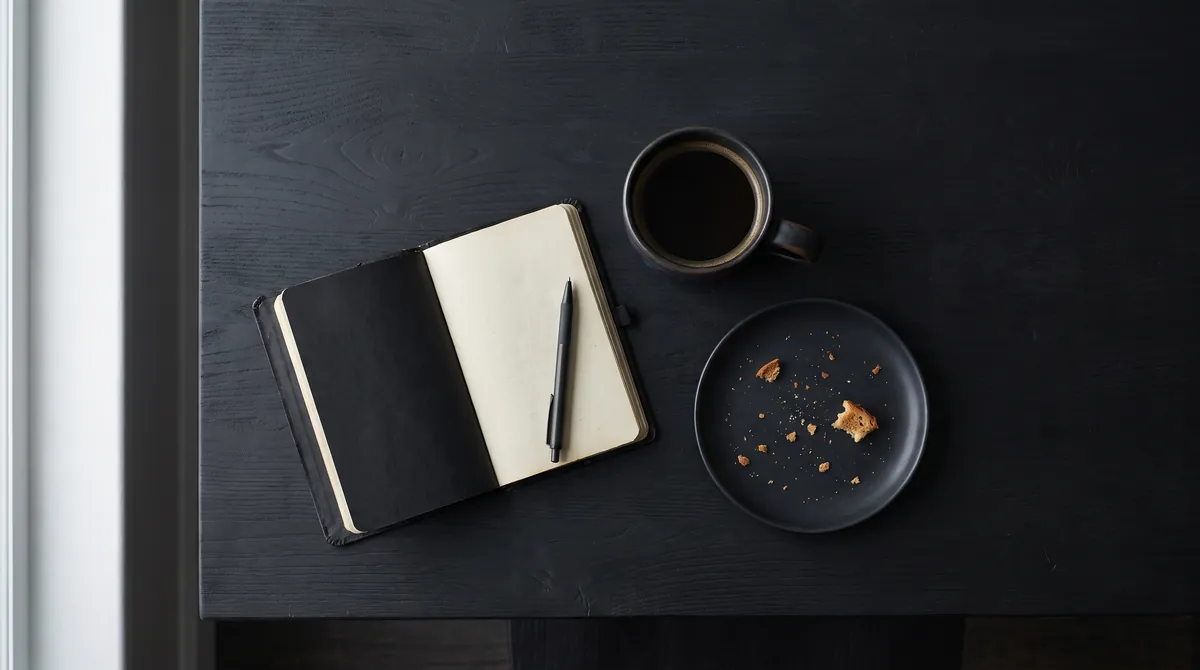
Slow living is a conscious decision to stop letting your calendar run your nervous system. It does not require a cottage, a garden, or a subscription to artisan sourdough flour. At its core, slow living means choosing attention over autopilot, even inside a packed Tuesday. This article breaks down what the practice actually looks like for people who commute, have demanding jobs, and still want some version of a quieter life.
The research backs this up: a 2025 BMC Psychology study of 7,570 people across six European countries found that chronic time pressure is a significant predictor of depression, anxiety, and stress, explaining up to 24% of variance in symptom scores beyond age and gender alone (PMC12751689). That is not a small effect. Feeling perpetually rushed is not just uncomfortable; it is measurably making people unwell.
TL;DR
- No cottage required: slow living just means choosing attention over autopilot inside a normal, busy week, not quitting your job.
- Three low-effort starts: single-task one activity a day, get 15 minutes outside, and keep a 20-minute screen-free gap each morning.
- It matters: chronic time pressure predicted up to 24% of depression, anxiety and stress scores in a 2025 study of 7,570 people.
What Slow Living Actually Means (And What It Does Not)
The phrase gets misread constantly. People see the aesthetic on social media, the linen aprons and the sourdough loaves, and assume slow living is a lifestyle available only to people with passive income and four unscheduled hours each morning. The practice actually connects to something more grounded: your physical environment shapes how rushed or calm you feel. Creating a home that supports rest is part of it, and the cozy home decor guide covers the specific changes that shift how a space feels to be in.
That is not what it is.
Laura Malloy, director of the Successful Aging Program at Harvard's Benson-Henry Institute for Mind Body Medicine, puts it plainly: "Slow living isn't about doing less, but doing more with greater focus and purpose and at the right speed." The goal is not to cut your task list in half. It is to stop doing everything in a state of low-grade panic (Harvard Health).
Slow living sits in the same neighborhood as mindfulness, minimalism, and the Italian "dolce far niente" (the sweetness of doing nothing), but it is more practical than any of those labels suggests. It is less of a philosophy and more of a daily editing habit.
Why Busy People Actually Need This More Than Anyone
The irony is that the people who most dismiss slow living as impractical are the ones who need it most. If your schedule is packed, the physiological cost of chronic rushing compounds daily.
Perpetual time pressure keeps the body's stress response switched on. High cortisol over weeks and months suppresses the immune system, increases cardiovascular risk, and chips away at working memory. A 2017 review published in PMC on neurobiological effects of chronic stress documented immune suppression as a direct outcome of prolonged stress exposure (PMC5573220). You can be physically healthy by traditional metrics and still be running a slow physiological deficit.
The response most people reach for, adding more optimization, more productivity systems, more tracking apps, tends to accelerate the problem rather than solve it. It adds complexity in the name of control.
The Attention Economy Works Against You
Smartphones did not create the cult of busyness, but they made it permanent. There is no longer a natural pause between tasks because a device fills every gap. Waiting for the kettle, sitting on the bus, the two minutes before a meeting starts, all of those were once small breathing spaces. Now they are screen time. The slow living response to this is not a dramatic digital detox. It is just deciding to let some of those spaces be empty again.
What Slow Living Tips Actually Look Like in Practice
Here is the honest version, without the cottage and the unlimited free time:
1. Single-task one thing per day
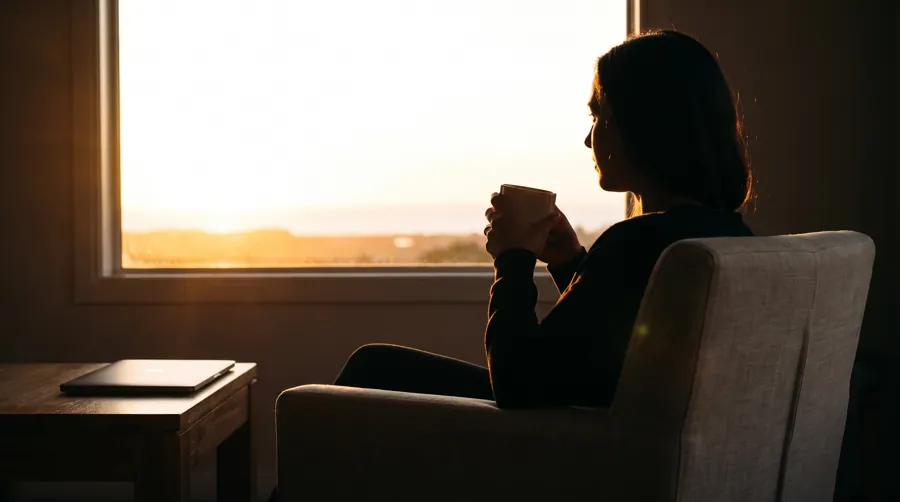
Pick one daily activity, making coffee, eating lunch, walking to the car, and do only that thing. No podcast, no scrolling, no planning the rest of the day out loud in your head. This is harder than it sounds for the first week. By week two, most people find they start craving it.
2. Build a 15-minute outside window into your schedule
This is not about exercise. A 2024 Harvard T.H. Chan School of Public Health report found that even 15 minutes in a natural setting can meaningfully improve mental health markers for city dwellers (Harvard T.H. Chan). A park bench counts. A slow walk around the block counts. The threshold is lower than most people expect.
3. Shrink the morning screen-free gap to just 20 minutes
Not an hour. Not a whole morning ritual. Twenty minutes between waking up and picking up your phone gives your nervous system a chance to settle before it gets handed a feed of other people's urgencies. Most people who try this report it has a disproportionate effect on how the rest of the day feels. If you want a complete low-distraction start to the day, the simple morning routine checklist is a good companion.
4. Cook one meal per week without a timer
Cooking with full attention, not while watching something, is one of the simplest slow living entry points there is. The physical engagement, the smell, the heat, the texture, pulls attention into the present moment more reliably than most formal mindfulness exercises. You do not need to do this every night. Once a week is enough to change your relationship with the kitchen.
5. Let transitions be actual transitions
Most people move from one task or space to another and stay mentally in the previous one for ten minutes. When you finish work, finish work. When you walk in the door at home, stop. Take 60 seconds. That micro-pause is not wasted time; it is a circuit breaker between modes. A wind-down practice at the end of the day helps create a clean edge between work mode and rest. The calming evening wind-down routine covers exactly this transition in practical steps.
The Slow Living Aesthetic Is Not the Practice
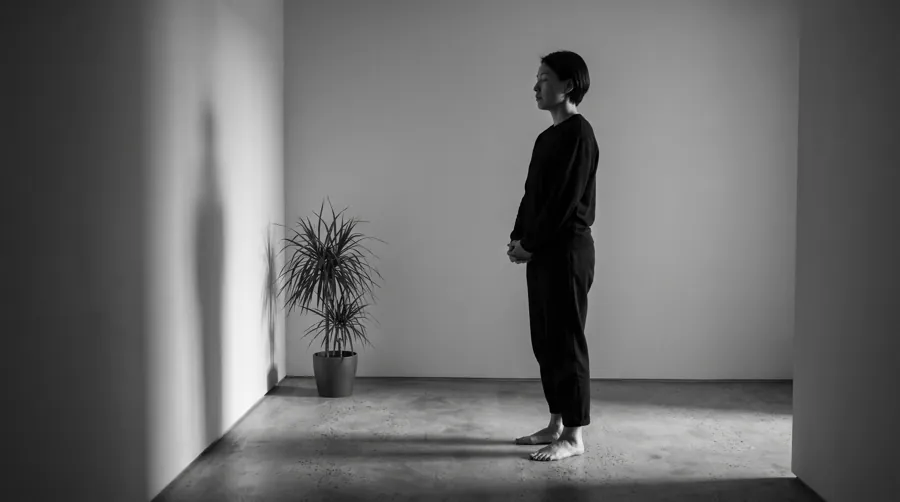
This needs saying directly: the slow living aesthetic, the neutral tones, the hand-thrown mugs, the linen everything, is a marketing category. It can coexist with the practice, but it is not the practice. You can spend $400 on a ceramic jug and still rush through every meal. You can also practice slow living in a studio apartment with furniture from IKEA.
The aesthetic became popular because it is visually coherent and easy to sell on Instagram. The actual practice is less photogenic. It looks like someone sitting quietly for five minutes without doing anything useful. It looks boring. That is, somewhat, the point.
What Is Slow Living When You Have Kids or Multiple Jobs
This is where most advice falls apart. If you have children under ten or are working more than one job, "slow mornings" and "leisurely cooking" are not options you can just schedule in. The practice has to shrink to fit what is actually available.
Smaller versions still work. A three-minute cup of tea before anyone else wakes up. Five minutes of sitting outside after school drop-off before getting back in the car. Reading three pages of a book before bed instead of opening social media. None of these are transformative individually. Stacked over weeks, they are, because they are training the nervous system to downshift.
INTEGRIS Health, an Oklahoma-based hospital network, notes that the cumulative health benefits of slow living practices include lower blood pressure and improved short-term memory, both of which compound over time rather than appearing after a single session (INTEGRIS Health).
A Simple Starting Framework
If you want a concrete starting point, here is a three-week sequence that does not require restructuring your life:
- Week 1: Identify one daily task and do it without a second screen or audio. Just that one thing, once a day.
- Week 2: Add 15 minutes outside, any outdoor setting, at any time. Non-negotiable, non-productive.
- Week 3: Build a 20-minute screen-free window into the first part of your morning.
After three weeks, notice what changed. Most people find that one or two of these stuck naturally and the others need iteration. That is fine. Slow living is not a program with a graduation date.
Watch: Slow Living in Practice
This video explores the quiet shift more people are making toward a deliberately slower pace, including interviews with city dwellers who found practical entry points without overhauling their lives:
Worth watching for the specific examples from people in urban settings. The video covers how slow living looks different for everyone and challenges the assumption that it requires a rural backdrop.
Key Takeaways
- Slow living is about attention and pace, not aesthetics or income level.
- Chronic time pressure is a clinically significant predictor of anxiety, depression, and stress, according to a 2025 multi-country study.
- You do not need long stretches of free time. Small, repeated practices compound over weeks.
- The slow living aesthetic on social media is a commercial category, not the practice itself.
- Even 15 minutes outside, one screen-free morning gap, or one attentive meal per week moves the needle.
- Parents and people with multiple jobs can practice slow living at reduced scale. The micro-version still works.
- For more on creating a home environment that supports this kind of intentional living, browse the home and living category.
Frequently Asked Questions
What is slow living, exactly?
Slow living is a deliberate choice to do fewer things simultaneously and with more conscious attention. It is not about being unproductive or retreating from modern life. Harvard Health describes it as doing things "at the right speed," which means resisting the pressure to rush everything by default.
What are the most practical slow living tips for someone with a demanding job?
Start small. Single-tasking one activity per day, a 15-minute walk outside, and a 20-minute morning screen-free gap are three changes that require almost no structural rearrangement but produce measurable reductions in daily stress over time. None of them require more than 20 minutes added to your existing schedule.
Is slow living just for people who can afford to work less?
No. The income-and-leisure version of slow living is a social media construction. The actual practice is about how you engage with whatever time you already have, not how much of it you possess. A 10-minute intentional cup of coffee is slow living. A two-hour farmers market stroll is also slow living. Both count.
What does "slow living aesthetic" mean versus actually living slowly?
The aesthetic refers to a visual style: natural materials, muted colors, handmade objects, rural or pastoral imagery. It is popular on Instagram and Pinterest and is heavily monetized. The practice of slow living has no required visual style. You can live slowly in a city apartment with zero linen and no sourdough starter.
Sources
1. Chronic time pressure as a predictor of symptoms of depression, anxiety and stress - PMC (2025) 2. Taking it slow - Harvard Health 3. For city dwellers, even 15 minutes in nature can improve mental health - Harvard T.H. Chan School of Public Health 4. Benefits of Slow Living: Improving Mental and Physical Health - INTEGRIS Health (2025) 5. Neurobiological and Systemic Effects of Chronic Stress - PMC (2017)
Wellness Tabloid is reader-supported: this page shows ads and some outbound links may be affiliate links.
Fact-checked against cited sources. Reviewed by the Wellness Tabloid editorial team.