10 Breakfast Meal Prep Ideas That Make Weekday Mornings Actually Easy

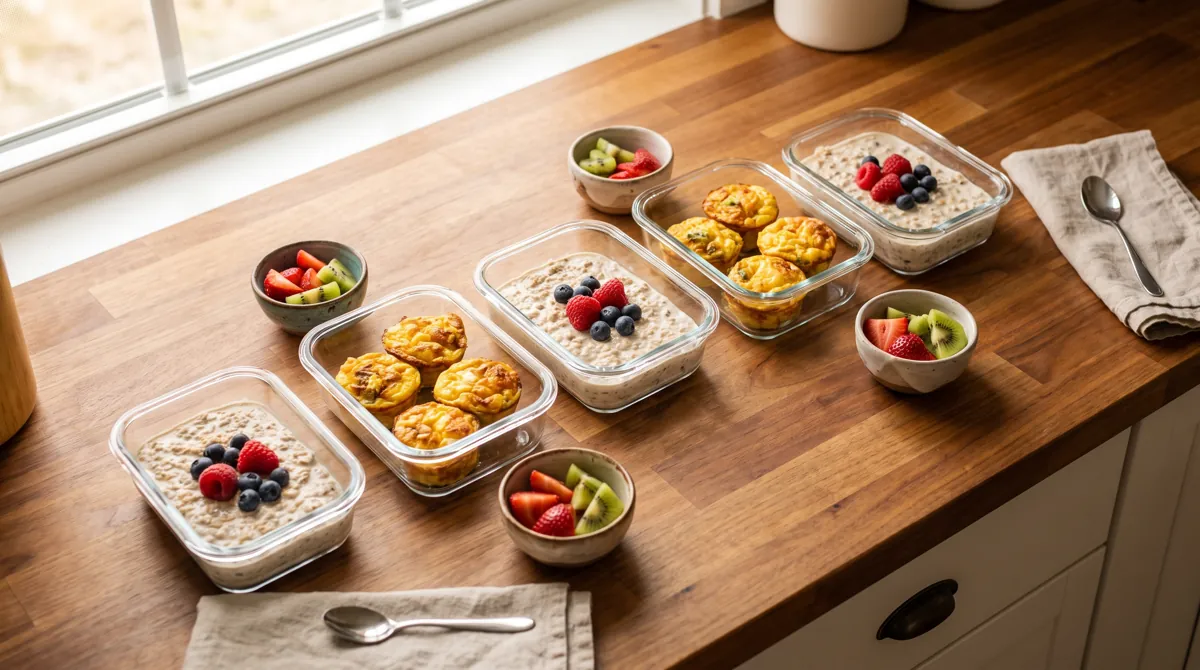
Breakfast meal prep means spending 45 to 60 minutes on Sunday making breakfasts you can grab from the fridge or freezer every morning that week. Done right, it ends the "I'll just skip it" habit that leaves you ravenous by 10 a.m. and reaching for whatever's nearby. This guide covers 10 specific, tested options: what to make, how long each lasts, and how to actually build a rotation that sticks. If you want to extend your prep beyond just mornings, pairing this system with a high-protein meal prep approach for lunches and dinners makes the whole week run more smoothly.
TL;DR
- One 45-to-60-minute Sunday session gives you five weekday breakfasts you can serve in under 5 minutes each.
- Easiest starting points: overnight oats, egg muffins (12 to 15 grams of protein per pair), and baked oatmeal.
- Oat-based dishes keep 5 days refrigerated, egg dishes 3 to 4 days, and freezer burritos or pancakes up to 2 months.
Why Breakfast Skipping Is a Bigger Deal Than People Think
There is a persistent idea that skipping breakfast is fine, maybe even good for you if you're doing some form of intermittent fasting. The research picture is more complicated. USDA Economic Research Service data shows that adults who skip breakfast fall short on key nutrients including folate, calcium, iron, and vitamins A, B1, B2, B3, C, and D on the days they skip. You can technically make those up later in the day, but most people don't.
A 2024 study published in the Journal of Dairy Science found that a protein-rich breakfast increased satiety and improved cognitive concentration scores measured before lunch, compared to both skipping breakfast and eating a carbohydrate-heavy meal. That's not magic. It's just what happens when your blood sugar doesn't crater at 9 a.m.
The practical argument for meal prepping breakfast is simpler: decision fatigue is real. When you're tired and running late, "there's nothing ready" beats good intentions every time. Having food in a container removes the decision entirely. This same logic applies at every meal, which is why many people combine a breakfast prep routine with a broader approach to weekly meal planning across the day.
What Makes a Good Breakfast Meal Prep Recipe
Not everything reheats well. Not everything keeps five days in the fridge. Before picking recipes, it helps to understand what actually works in a meal prep context:
- Holds texture after reheating. Egg-based dishes, oats, and grain bowls do this well. Dishes with crispy elements (think toast, fried potatoes) do not.
- Has enough protein to carry you to lunch. Harvard Health Publishing recommends aiming for at least 15 to 20 grams of protein at breakfast to slow gastric emptying and reduce mid-morning hunger.
- Takes under 5 minutes to serve. If you have to cook it in the morning, it's not really prepped.
- Stores safely for at least 4 days refrigerated or 2 months frozen. The USDA puts cooked egg dishes at 3 to 4 days refrigerated.
The 10 Best Breakfast Meal Prep Ideas
1. Overnight Oats
Combine half a cup of rolled oats with half a cup of milk (dairy or oat), a tablespoon of chia seeds, and a teaspoon of maple syrup in a mason jar. Seal it, shake it, leave it overnight. In the morning, top with whatever you have: sliced banana, frozen berries thawed for 90 seconds, peanut butter.
Five jars takes about 10 minutes to set up. They keep 5 days in the fridge. The chia seeds add about 5 grams of protein and 5 grams of fiber per jar. That alone changes how the first few hours of your morning feel.
2. Egg Muffins (Baked Egg Cups)
Beat 8 to 10 eggs with salt, pepper, and whatever fillings you have: diced bell pepper, spinach, shredded cheddar, crumbled sausage. Pour into a greased muffin tin and bake at 350°F for 18 to 22 minutes. One batch makes 12 muffins. Two muffins run roughly 150 to 200 calories and 12 to 15 grams of protein depending on your add-ins.
These reheat in 60 seconds flat. They also freeze well: store in a zip bag, pull them out the night before, and they're thawed by morning.
3. Sheet Pan Frittata
A frittata is essentially a crustless quiche. Pour beaten eggs mixed with your fillings into a parchment-lined 9x13 baking dish and bake at 375°F for 20 to 25 minutes. Slice into rectangles when cooled. Each slice is easy to reheat or eat cold. Using a sheet pan gives you more surface area than a skillet, which means more servings per batch and better texture throughout.
4. Greek Yogurt Parfait Components
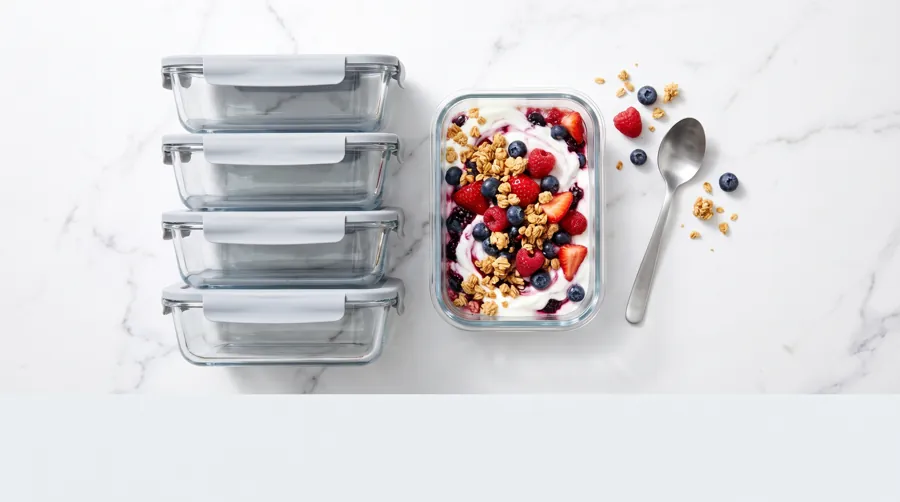
This one is less about cooking and more about pre-portioning. Buy a large tub of plain Greek yogurt (Fage 2% or Chobani plain both work). Portion it into five containers, then prep toppings separately: a bag of mixed nuts and seeds, frozen berries in a separate container, a small jar of honey. Each morning, top and go. Takes literally 90 seconds.
Plain Greek yogurt has around 17 grams of protein per 3/4 cup serving. That beats most protein bars at a fraction of the cost.
5. Freezer Breakfast Burritos
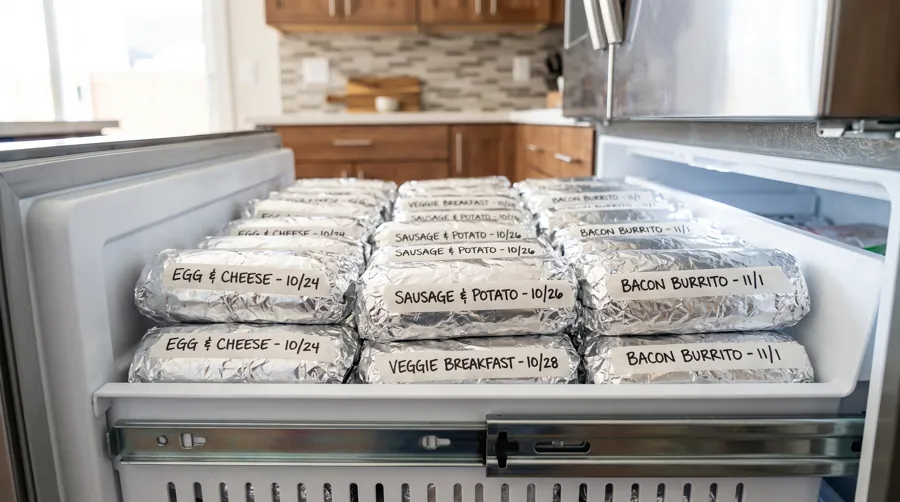
Scramble eggs with black beans, sauteed onion and pepper, and shredded cheese. Spoon into flour tortillas, roll tight, wrap in foil. Freeze the whole batch. The morning routine: unwrap from foil, wrap in a paper towel, microwave 2 to 3 minutes. Add salsa. Done.
A batch of 8 burritos takes about 30 minutes. They last 2 months frozen. This is the option that makes the most sense if you want to prep once and not think about breakfast for weeks at a time.
6. Chia Seed Pudding
Mix 3 tablespoons of chia seeds with one cup of milk. Add a splash of vanilla. Stir well, then stir again after 5 minutes to prevent clumping. Refrigerate overnight. The seeds absorb the liquid and turn into a thick pudding-like consistency. Keeps 5 days refrigerated. Top with sliced mango, toasted coconut, or granola.
Each serving has about 10 grams of fiber and 6 grams of protein. It's also one of the cheapest options on this list: a bag of chia seeds from Costco or Trader Joe's costs around $8 and makes roughly 30 servings.
7. Banana Oat Protein Pancakes (Freezer Batch)
Blend 2 ripe bananas, 2 eggs, and 1 cup of rolled oats until smooth. Cook on a griddle like regular pancakes. One blender batch makes 10 to 12 small pancakes. Let them cool completely, then stack with parchment between each one and freeze. In the morning, pop 3 or 4 in the toaster for 3 to 4 minutes.
These have no added flour or sugar. Each pancake has about 4 grams of protein from the eggs and oats. Spread with almond butter and you're closer to 20 grams for the full serving.
8. Savory Grain Bowls
Cook a big pot of farro, quinoa, or brown rice on Sunday. Portion into five bowls with a soft-boiled egg (peel and store in water in the fridge), half an avocado's worth of sliced avocado added fresh each morning, and a drizzle of soy sauce or hot sauce. The grain is the only thing you actually prep. Everything else takes 2 minutes to assemble.
Savory breakfast is legitimately underrated in the US. In Japan, South Korea, and most of Southeast Asia, people eat rice and eggs for breakfast without thinking about it. The idea that breakfast has to be sweet is a marketing invention, not a nutritional requirement.
9. Smoothie Packs
This is about prep, not about making smoothies the night before (which turns brown and sad). Portion smoothie ingredients into zip bags: frozen banana, frozen mango or berries, a handful of spinach, and a tablespoon of flax. Store in the freezer. Morning routine: dump one bag into the blender, add liquid and protein powder or Greek yogurt, blend 45 seconds.
This cuts smoothie prep from 5 to 6 minutes of hunting through the freezer down to about 90 seconds. Small thing, but it matters when you're half-awake.
10. Baked Oatmeal
Baked oatmeal is oatmeal's better, more interesting cousin. Mix 3 cups of rolled oats with 2 cups of milk, 2 eggs, 3 tablespoons of maple syrup, 1 teaspoon of cinnamon, and whatever mix-ins you want (blueberries and walnuts, diced apple and cinnamon, chocolate chips and banana). Pour into a greased 8x8 baking dish. Bake at 375°F for 35 to 40 minutes.
Slice into portions and refrigerate. Each morning, heat one portion for 90 seconds. It tastes completely different from stovetop oats: denser, more custardy, closer to a baked good. Keeps 5 days refrigerated, freezes well for up to 3 months.
How to Build a Weekly Breakfast Rotation
The simplest approach is to pick two or three recipes per Sunday prep session, not all ten. Here's how a realistic rotation might look:
| Day | Option | Prep Required |
|---|---|---|
| Monday | Overnight oats | Grab from fridge, top with berries |
| Tuesday | Egg muffins | 60 seconds in microwave |
| Wednesday | Greek yogurt parfait | 90 seconds to assemble |
| Thursday | Freezer breakfast burrito | 2 to 3 minutes in microwave |
| Friday | Baked oatmeal | 90 seconds in microwave |
Rotating keeps things interesting enough that you don't burn out on meal prep. When everything tastes the same five days in a row, you stop doing it.
Storage, Containers, and Food Safety
The USDA guidelines for cooked eggs and egg dishes are clear: refrigerate within 2 hours of cooking and consume within 3 to 4 days. For grains, cooked rice and oats keep 4 to 6 days refrigerated. Smoothie packs and baked pancakes last 2 months in a proper freezer.
Container choice matters more than people realize. Wide-mouth pint mason jars work perfectly for overnight oats and chia pudding. For egg muffins and frittata slices, use glass snap-lock containers rather than plastic: they go from fridge to microwave without needing to be transferred. A set of 5 or 10 matching containers makes stacking in the fridge much easier and cuts down on the "hunting for a lid" problem that derails more meal prep routines than people admit. Building a morning routine around prepped food pairs well with other intentional morning habits; a simple morning routine checklist can help you layer these habits together without overthinking the sequence. You can also browse more ideas in the Food and Kitchen category.
Key Takeaways
- Spending 45 to 60 minutes Sunday prepping breakfast saves 15 to 20 minutes every weekday morning and reduces the chance of skipping breakfast entirely.
- Protein matters more than calories at breakfast: aim for 15 to 20 grams to support satiety and morning concentration.
- Overnight oats, egg muffins, and baked oatmeal are the most reliable starting points for beginners: low skill, high payoff, easy storage.
- Freezer-friendly options (burritos, banana oat pancakes, smoothie packs) extend your prep window to once every 2 to 4 weeks if you build a stock.
- Pick 2 to 3 recipes per session. Rotating through 10 at once is how meal prep becomes a chore instead of a system.
- Use glass containers where possible: they reheat cleaner, stack better, and last longer than most plastic alternatives.
Frequently Asked Questions
How long does breakfast meal prep last in the fridge?
Most cooked egg-based breakfasts (egg muffins, frittata, baked egg cups) keep 3 to 4 days refrigerated, per USDA food safety guidelines. Oat-based dishes like overnight oats, chia pudding, and baked oatmeal last 5 days. Freezer options like burritos and pancakes last up to 2 months when stored in airtight bags.
What is the best high-protein breakfast to meal prep?
Egg muffins are the most protein-dense option per serving, typically delivering 12 to 15 grams of protein from eggs alone, plus more from cheese or meat add-ins. Greek yogurt parfaits (with plain Fage or Chobani) come close at 17 grams per 3/4 cup of yogurt. Both reheat or assemble in under 2 minutes.
Can you meal prep breakfast for 5 days at once?
Yes, for most options. Overnight oats, chia pudding, baked oatmeal, and yogurt parfait components all last 5 days safely refrigerated. Egg-based dishes are better kept to 4 days maximum, so either prep a second smaller batch midweek or rely on frozen options for day 4 and 5.
Is it worth meal prepping breakfast if you're not a morning person?
Especially if you're not a morning person. The whole point is removing decisions and cooking time from the hours when you have the least capacity for both. Grab-and-go options like overnight oats and egg muffins require zero thought in the morning, which is precisely when meal prep pays off the most.
Sources
- Bechthold, A. et al. (2019). "Breakfast in Human Nutrition: The International Breakfast Research Initiative." Nutrients. National Institutes of Health/PubMed: https://pmc.ncbi.nlm.nih.gov/articles/PMC5986439/
- USDA Economic Research Service. (2020). "Skipping Breakfast or Lunch Has a Larger Impact on Diet Quality Than Skipping Dinner." https://www.ers.usda.gov/amber-waves/2020/july/skipping-breakfast-or-lunch-has-a-larger-impact-on-diet-quality-than-skipping-dinner
- Grunert, S. et al. (2023). "A dairy-based, protein-rich breakfast enhances satiety and cognitive concentration before lunch." Journal of Dairy Science. PubMed: https://pubmed.ncbi.nlm.nih.gov/38135050/
- Harvard Health Publishing. "What's a healthy breakfast?" Harvard Medical School: https://www.health.harvard.edu/blog/whats-a-healthy-breakfast-201809132919
- USDA Food Safety and Inspection Service. "Eggs and Egg Products." Food Safety Basics: https://www.fsis.usda.gov/food-safety/safe-food-handling-and-preparation/eggs/shell-eggs-farm-table
The video above walks through a practical Sunday prep session covering several of the options in this article. Worth watching if you want to see the actual timing and container setup in action before trying it yourself.
Wellness Tabloid is reader-supported: this page shows ads and some outbound links may be affiliate links.
Fact-checked against cited sources. Reviewed by the Wellness Tabloid editorial team.