Fibermaxxing: How to Eat More Fiber Without the Bloat

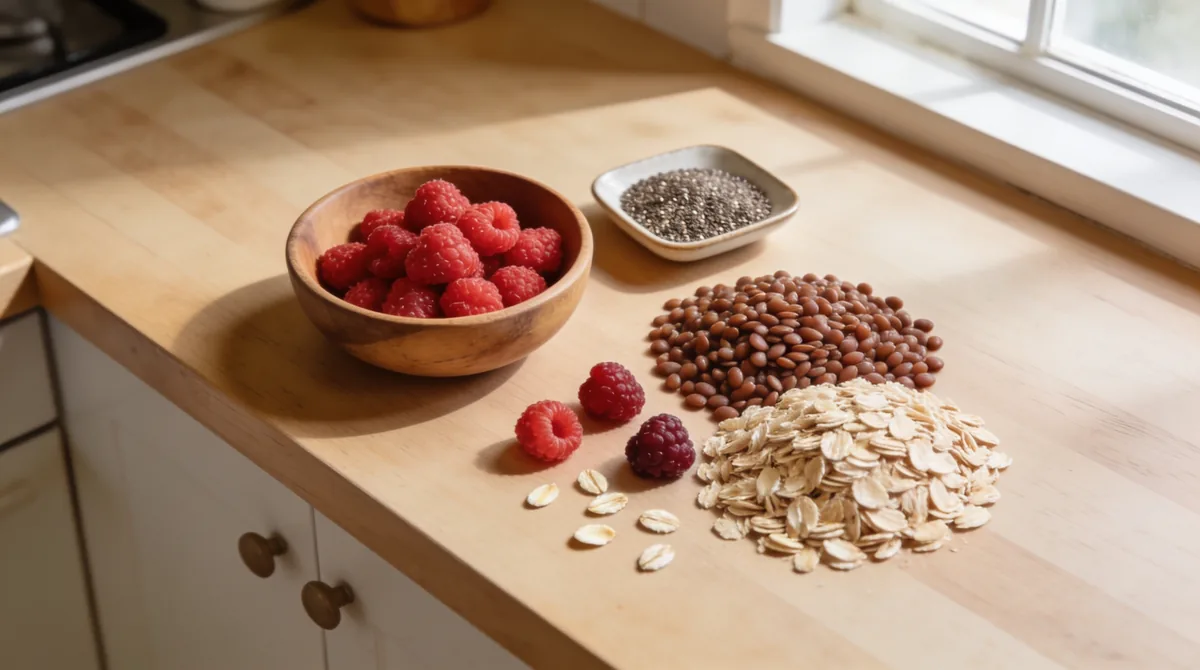
Fibermaxxing is the latest food trend to spill out of TikTok and into real kitchens, and unlike most viral eating advice, this one points at something genuinely useful. The idea is to deliberately max out your fiber intake, meaning you aim to meet or comfortably exceed your recommended daily target instead of drifting along on the roughly half-portion most people actually eat. More fiber can help with regularity, keep you full longer, and steady your energy after meals. There is a catch, though, and it is the reason so many people try fibermaxxing for three days and quit: pile on the fiber too fast and your gut responds with gas, cramping, and bloating. This guide covers how to get the benefits without the discomfort, which foods do the heavy lifting, and a simple rule for ramping up. If you are already building structured meals, it pairs well with a high-protein meal prep routine, since protein and fiber tend to live in the same containers.
TL;DR
- What it is: fibermaxxing means deliberately maxing out your daily fiber, aiming to meet or exceed your target instead of falling short of it.
- The upside: more fiber supports regularity and keeps you fuller between meals, which is why people bother with it.
- The honest downside: adding fiber too fast causes gas, cramping, and bloating, so ramp up slowly over a few weeks and drink more water as you go.
What Fibermaxxing Actually Means
Fibermaxxing is a made-up word for a real habit: trying to max out, meaning meet or exceed, your daily fiber target (Mayo Clinic Press, Fibermaxxing). It sounds like a lot of nutrition trends that turn out to be nonsense, but this one starts from a legitimate gap. Most people in the United States eat well under the recommended amount of fiber, so for the average person, aiming higher is aiming in the right direction.
Here is what the target actually looks like. Mayo Clinic puts the recommended daily fiber intake at 25 grams for women and 38 grams for men under 50. After 50, when we generally eat and absorb a little less, the numbers drop to 21 grams for women and 30 grams for men (Mayo Clinic, Dietary fiber). Those are the goalposts. Fibermaxxing is simply the decision to reach them on purpose rather than by accident, and for some people to push a bit past them.
The reason fiber earns this attention is that it does more than move things along. It slows the release of sugar into your blood after a meal, feeds the bacteria in your gut, and adds bulk that helps you feel full without extra calories. That combination is why a bowl of oatmeal keeps you satisfied longer than the same calories from a pastry. None of this is new science. What is new is a catchy name that got a lot of people to pay attention to a nutrient that used to put them to sleep.
Does Fiber Cause Bloating? The Honest Answer
This is the question that decides whether fibermaxxing works for you or backfires, so I want to be straight about it. Fiber itself is not some troublemaker that inflates your stomach on contact. What causes the trouble is speed. When you add a large amount of fiber quickly, the bacteria in your large intestine suddenly have far more to ferment than they are used to, and fermentation produces gas. That gas is the bloating, the pressure, and the general feeling that you swallowed a balloon.
Mayo Clinic is direct about the mechanism and the fix. Adding too much fiber too quickly can bring on intestinal gas, diarrhea, cramping, and bloating, and the recommendation is to increase fiber gradually over a few weeks rather than a few days (Mayo Clinic, Dietary fiber). The same warning shows up in Mayo Clinic's coverage of the fibermaxxing trend specifically, because the trend's biggest flaw is that it encourages people to jump straight to a huge number (Mayo Clinic Press, Fibermaxxing). Someone eating 12 grams a day sees an influencer hit 50 and tries to match it by tomorrow. Their gut has no time to adapt, and the result is exactly the discomfort that makes them give up.
So the honest answer is yes, fiber can cause bloating, but almost always because of how fast you added it, not because the fiber is bad for you. Slow the ramp down and the bloating usually does the same.

The Fiber Ramp Rule
Since the whole problem is speed, the solution is a pace you can actually follow. I call it the Fiber Ramp Rule, and it has four parts that work together.
Add about 5 grams of fiber per week. Instead of leaping to your full target, raise your daily intake by roughly one small addition at a time. Five grams is about a half cup of black beans, or a pear, or a cup of cooked broccoli. Hold at the new level for a week, let your gut catch up, then add the next 5 grams. If you are starting around 12 grams and heading for 30, that is a few weeks of gradual increases, which lines up exactly with Mayo Clinic's advice to build fiber over weeks rather than days (Mayo Clinic, Dietary fiber).
Increase your water as you increase your fiber. This one is not optional. Fiber absorbs water in your digestive tract, and without enough fluid it can move too slowly and leave you constipated, which is the opposite of what you were going for. Mayo Clinic specifically pairs higher fiber with higher fluid intake for this reason (Mayo Clinic, Dietary fiber). A practical habit: a full glass of water with every meal that carries a fiber load.
Spread fiber across the whole day. Thirty grams eaten in one enormous salad at dinner will bother you far more than the same 30 grams split across breakfast, lunch, snacks, and dinner. Smaller, steadier amounts give your gut bacteria a manageable job at each meal instead of one overwhelming shift. This alone solves a lot of the bloating people blame on fiber in general.
Favor whole foods over powders. Whole foods bring fiber packaged with water, vitamins, and a slower structure your body handles more gently than a scoop of isolated fiber dumped into a drink. More on why below, but as a ramp principle, real food is the easier on-ramp.
Follow those four and fibermaxxing stops being a gamble. You are not trying to win a one-day fiber contest. You are moving a dial a little at a time until high fiber is just how you eat.
High-Fiber Foods Worth Building Around
You do not need exotic ingredients to hit your target. A handful of everyday foods do most of the work, and the numbers below, drawn from Mayo Clinic's high-fiber foods chart, show why a few smart choices add up fast (Mayo Clinic, High-fiber foods chart). Treat these as approximate, since exact grams vary by size and brand.
| Food | Serving | Approximate fiber |
|---|---|---|
| Chia seeds | 1 oz | ~10 g |
| Raspberries | 1 cup | ~8 g |
| Black beans | 1/2 cup | ~7.5 g |
| Cooked lentils | 1/2 cup | ~7 to 8 g |
| Whole-wheat spaghetti (cooked) | 1 cup | ~6 g |
| Pear with skin | 1 medium | ~5.5 g |
| Broccoli (cooked) | 1 cup | ~5 g |
| Oatmeal (cooked) | 1 cup | ~4 g |
Look at how quickly this stacks up. A cup of oatmeal with a tablespoon of chia and a handful of raspberries pushes past 15 grams before you have left the breakfast table. Add a half cup of lentils at lunch and a pear as a snack and you are already near a full day's target for a woman under 50, with dinner still to come. That is the practical case for fibermaxxing: the target is not hard to reach once you know which foods carry real weight. The mistake is trying to reach it all in one meal instead of letting these foods accumulate across the day.
Why Whole Foods Beat Supplements and Gummies
The supplement aisle noticed fibermaxxing fast, and now there are fiber gummies, fiber drink mixes, and powders promising to solve the whole thing in one scoop. I would skip most of them. Mayo Clinic's take on the trend is that whole foods give you better overall nutrition than fiber supplements, gummies, or drink mixes (Mayo Clinic Press, Fibermaxxing). The reason is simple. A pear brings fiber along with water, potassium, vitamin C, and a structure your gut processes gradually. A gummy brings isolated fiber and often added sugar, minus everything else that made the food worth eating.
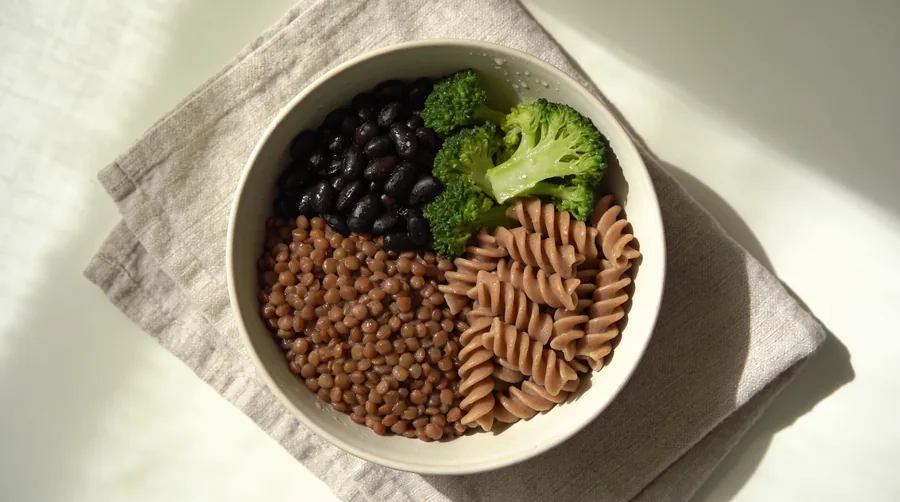
There is also a behavior problem with supplements. It is easy to take three fiber gummies in ten seconds and accidentally deliver a large fiber dose all at once, which is exactly the fast spike that causes bloating. Eating a bowl of beans takes longer and comes with natural portion limits. Supplements have their place, mainly for people who genuinely cannot reach their target through food, but they are a backup, not the plan. If you can get there with raspberries, lentils, oats, and whole-wheat pasta, that is the version worth building your week around.
How Long Fiber Bloating Lasts
If you did jump in too fast and now you are uncomfortable, the good news is that it usually passes. Your gut adapts to a higher fiber intake once that intake stays steady. The bacteria that ferment fiber adjust to the new normal, and the gas that comes with the transition tends to settle down.
As general guidance, bloating from a sudden jump in fiber usually eases within a few days to a couple of weeks, provided you do three things: slow down the pace, drink more water, and keep your intake consistent rather than swinging between huge fiber days and none at all. Consistency is what lets your gut settle into a rhythm. If you spike your fiber for a day, feel awful, quit for a week, then spike again, you never give your body the steady signal it needs to adapt. Hold a level, let it become routine, and the discomfort typically fades on its own. If bloating is severe or drags on well past that window, that is a sign to check in with a healthcare professional rather than pushing through.
Who Should Be Careful With Fibermaxxing
For most healthy people, gradually eating more fiber is a straightforwardly good idea. Some people, though, should not treat this as a free-for-all. Mayo Clinic notes that anyone with diverticulitis, irritable bowel syndrome (IBS), or a history of bowel obstruction should check with a healthcare professional before loading up on fiber (Mayo Clinic Press, Fibermaxxing). For these conditions, the type and timing of fiber can matter a great deal, and the right amount is not always the highest amount.
This is the part fibermaxxing videos tend to skip, because a blanket rule of more is better is easier to say than the truth, which is that it depends on your gut. If your digestion is generally fine and you simply eat too little fiber, the ramp rule is all you need. If you have a diagnosed digestive condition, the smarter move is a short conversation with your doctor before you overhaul your plate. That is not being overly cautious. It is the difference between a trend that helps you and one that lands you in real discomfort.
Key Takeaways
Browse the full food and kitchen category for more practical guides on eating well without overcomplicating your week.
- Fibermaxxing means deliberately maxing out your daily fiber, aiming to meet or exceed the target instead of falling short. Most people fall short, so aiming higher is the right direction.
- The daily targets are 25 grams for women and 38 grams for men under 50, and 21 grams for women and 30 grams for men over 50.
- Fiber can cause gas and bloating, but almost always because you added it too fast. The fiber is not the problem, the speed is.
- Use the Fiber Ramp Rule: add about 5 grams per week, drink more water as you go, spread fiber across the day, and favor whole foods.
- Whole foods beat supplements, gummies, and drink mixes for overall nutrition and are easier on your gut.
- Bloating from a sudden jump usually eases within a few days to a couple of weeks if you slow down, hydrate, and stay consistent.
- People with diverticulitis, IBS, or a history of bowel obstruction should talk to a healthcare professional before loading up on fiber.
Frequently Asked Questions
Does fiber cause bloating?
Fiber can cause bloating, but usually because of how fast you added it rather than the fiber itself. When you increase fiber quickly, the bacteria in your gut ferment the extra amount and produce gas, which is what you feel as bloating and pressure. Mayo Clinic notes that too much fiber too quickly brings on gas, cramping, and bloating, and recommends increasing it gradually over a few weeks. Add fiber slowly and most people avoid the problem entirely.
How long does fiber bloating last?
As general guidance, bloating from a sudden jump in fiber usually eases within a few days to a couple of weeks. Your gut adapts as your intake stays steady, so the key is to slow your pace, drink more water, and keep your fiber consistent rather than swinging high one day and low the next. If bloating is severe or lasts well beyond that window, check in with a healthcare professional.
Can too much fiber cause bloating?
Yes. Adding too much fiber too quickly can cause not just bloating but also intestinal gas, cramping, and diarrhea, according to Mayo Clinic. The fix is not to avoid fiber but to build it up gradually over a few weeks instead of a few days, and to increase your water intake at the same time so the fiber can move through your system comfortably.
How do you increase fiber without bloating?
Follow a gradual ramp. Add roughly 5 grams of fiber per week rather than jumping to your full target, drink more water as you increase fiber, spread your fiber across all your meals instead of one large serving, and get it from whole foods like beans, berries, oats, and vegetables rather than supplements. This gives your gut time to adapt, which is what prevents the gas and bloating in the first place.
Wellness Tabloid is reader-supported: this page shows ads and some outbound links may be affiliate links.
Fact-checked against cited sources. Reviewed by the Wellness Tabloid editorial team.